Parents expectations from schools in 2026 are based on having small classes; a mentoring teaching methodology; balanced digital learning, as well as real world skills and opportunities; and emotional support. Schools are modifying and adapting curriculum to include academic and holistic development to compensate for the current demands.
There is no parenting guide, but the school selection question parents ask today is not the same as it was only a few years ago. Gone are the days when parents were primarily concerned with board results and the number of academic subjects on a school curriculum. Today, parents are concerned about the whole child. Are the school’s curricular and extra-curricular activities designed to help the student develop skills which will be relevant in the real world? Are students emotionally supported and not pushed beyond their academic capacity?
As the world becomes more competitive and complex, today’s parents are looking to schools to prepare their children for life beyond school. The blog looks at the demands Sri Ganganagar parents have for schools and why schools like Birla Public School Sri Ganganagar have decided to meet those demands.
Why Parents’ Expectations Are Changing
A generation ago, a good school meant strong academics. Today, parents recognize that a school’s academics may have more of an impact on career longevity than traditional academic performance. Given the speed of industry and career changes, the importance of emotional resilience is greater than the importance of book smarts.
This phenomenon isn’t happening in a vacuum. It stems from three primary causes: more exposure to the world through the media and tourism and the increasing competition for higher education and employment, as well as a greater understanding of child psychology and mental health. Parents have developed an understanding that a school’s responsibility does not end with lesson planning and delivery; it is the development of confident, flexible individuals.
The Indian Education System Is Evolving
There has been considerable transformation in the Indian education system over the last few years, particularly since the introduction of the National Education Policy (NEP) 2020. For the first time in the history of Indian education policy, the new policy articulates a clear preference for experiential learning, critical thinking and flexibility, over rote memorization. Schools are now incentivized to reduce curriculum delivery, integrate vocational training, and focus on foundational literacy and numeracy.
This evolution is not confined to the metro cities of India. Schools across the country, including a school in Sri Ganganagar, have started to reflect these priorities.
Why the Future of Indian Education Looks Different
It is clear that the Indian education system is moving away from the traditional scorings system and adopting a system which pays equal emphasis to scorings and skills. Artificial intelligence, automation, and global connectivity will create a world of work which will very likely remain unknown to today’s students. Schools that do not transform run the risk of preparing students for a world that no longer exists by the time their students graduate.
This is the reason many institutions have started to focus on innovation in pedagogy, continual professional training for teachers, and reimagining spaces to enable learning and personal growth.
What Kind of Education Do You Want for Your Child?
Each of these priorities is combined by most parents in answering this question:
1. Smaller classrooms, bigger learning
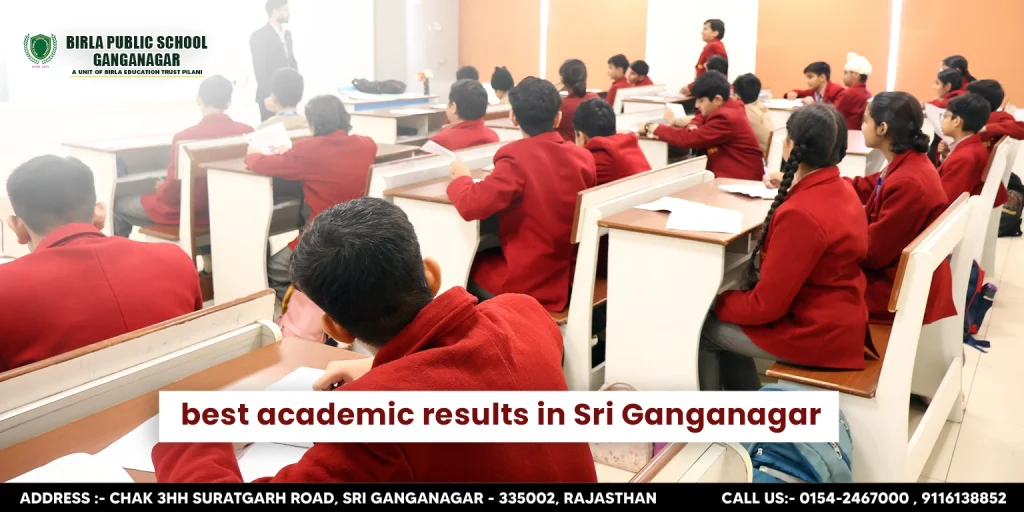
A smaller classroom helps the teacher guide, pace, and personalize the learning for each student. Overcrowded classrooms inhibit teachers from meeting the individual learning needs of students. Smaller classroom size is a concern for parents in determining daily instructional quality.
2. Teachers as Mentors
The role of teachers today is far greater than simply giving instructions. Teachers are expected to provide mentorship to students and navigate with them the intricacies of the world of work. Teachers who understand students and their unique challenges can shape the student’s future in ways teachers who are robotic and instruction following cannot.
3. Technology and screen balance
Integrated technology is a given, but parents and students are cautious about heavy screen based instruction. Classrooms should offer a wide variety of digital tools to help students understand each lesson as well as hands on activities to teach skills and enhance focus and creativity.
4. Classrooms offer global learning
Parents expect their child’s classrooms to offer them a view of the world well beyond their local community. This means having access to alternative curricula, foreign language options, and the chance to collaborate on learning projects with peers around the globe.
5. Skills That Matter More Than Marks
Employers and universities are placing less emphasis on marks and more on communicating well, having the ability to solve problems, the ability to work with others, and on being flexible. These abilities are becoming more prized than rote learning and memorization. Parents are insisting on schools serving as intentional builders of these skills.
6. Learning Beyond Textbooks
Field trips, project based learning, and hands on science are some of the ways that learners are engaged in connecting what they learn to what they see. While textbooks can be helpful for some learning, other methods can create a greater depth of understanding and retention.
7. Emotional Well-Being and Student Support
A high level of academic focus can lead to much greater burnout and anxiety than is necessary. Because of this, parents are expecting schools to bring in support systems for anxious students and focus on communicating with students.
The Common Goal Parents Share
While parents’ backgrounds, financial resources, and locations may differ, they all want the same thing for their child: to be an individual who is confident, capable, and kind. Marks are important, however their value has decreased, especially with parents seeking schools that provide more than ways to score higher on exams. The philosophy of Birla Public School Sri Ganganagar provides the things parents are looking for as they combine excellence in academics with support and mentorship in an array of skills.
Final Thoughts
Parents are now selective in choosing a school in Sri Ganganagar and everywhere else. Parents go beyond the school website and rankings. Parents actually go and visit the school, see what the class size is, see the philosophy of the school, and the overall well-being of the students. The schools who do that will more likely gain trust from parents.
If you are looking at schools, use all the available means. Go to the school, talk to current parents, ask about the school about mentorship and how they support students and where they are in developing their skills. The answer to this will provide the best fit for your family.
Frequently Asked Questions
What will schools look like in 2026?
Schools will more than likely have smaller class sizes, incorporate a lot of mentoring, balanced use of technology, lots of global engagement, strong focus on skill development, experiential Education, and emotional system of support.
What do you mean by emotional well-being?
The health and well-being of children in school has a significant effect on their engagement and their ability to learn. Schools have supported that healthy engagement and coping by providing emotional support and avoiding burnout.
What should parents look for in schools in Sri Ganganagar?
Look for an emphasis on mentorship-centered teaching, emotionally focused teaching and learning, balance in engaging students with technology and real world experiences, smaller class size, and a commitment to developing students academically and emotionally.
How do Birla Public School Sri Ganganagar’s methods cater to contemporary expectations of parents?
Birla Public School Sri Ganganagar has integrated internal structures that offer academic rigor along with mentoring, skill development, and support programs. With this, the school hopes to meet the demands of contemporary parents.