Choosing a school is one of the most important decisions parents make for their child. With numerous schools offering CBSE curriculum, modern infrastructure, residential facilities, sports, technology, and extracurricular activities, it can be difficult to decide which option is genuinely suitable.
Parents searching for a CBSE School in Sri Ganganagar may come across many schools that describe themselves as among the leading institutions in Rajasthan. However, the right choice should go beyond rankings, advertisements, or impressive brochures. A school should match your child’s academic needs, personality, interests, safety requirements, and long-term goals.
Whether you are comparing day schools or residential institutions, the following guide can help you evaluate schools more carefully and make an informed decision.
What “Top CBSE School in Rajasthan” Really Means Today
The term “top school” can mean different things to different families. Academic results may matter to some parents, while others may prioritise sports, arts, leadership, boarding facilities, or individual attention.
A good school should provide a balanced environment where students can develop academically, socially, physically, and emotionally. Instead of relying only on rankings, look at measurable factors such as:
- CBSE affiliation and academic structure
- Qualified and experienced teachers
- Student–teacher ratio
- Learning resources and laboratories
- Sports and extracurricular opportunities
- Student safety and pastoral care
- Residential facilities, where applicable
- Communication with parents
- Fee transparency
- Opportunities for leadership and skill development
This broader approach can help parents distinguish between a school that simply has a strong reputation and one that genuinely fits their child.
Start With Your Child’s Needs (Before Shortlisting)
Before searching for the Best School in Sri Ganganagar, start by understanding your child’s requirements.
Consider your child’s age, academic strengths, interests, learning style, personality, and future aspirations. A child interested in science may benefit from well-equipped laboratories and STEM activities, while another may thrive in an environment with strong sports, arts, music, or leadership programmes.
Parents should also consider practical requirements such as:
- Day school or boarding school
- Distance from home
- Preferred class size
- Language and communication environment
- Sports facilities
- Arts and cultural activities
- Academic support
- Residential facilities
- Transportation
- Budget
Creating these criteria before visiting schools makes comparison much easier.
Academic Quality Checklist (CBSE + Beyond)
CBSE affiliation provides an important academic framework, but parents should look beyond the curriculum itself.
Ask how the school approaches classroom learning. Does it encourage conceptual understanding, practical application, projects, discussions, and problem-solving?
Look for schools that balance academic fundamentals with skills such as communication, collaboration, creativity, critical thinking, and digital literacy.
Parents can also ask about:
- Board examination preparation
- Internal assessments
- Remedial support
- Subject-specific activities
- Career guidance
- Competitive examination support
- Library resources
- Laboratories
- Digital learning facilities
Academic success should be considered alongside the overall learning experience.
Student–Teacher Ratio & Personal Attention
A school may have excellent facilities, but students also need meaningful interaction with teachers.
Ask about the student–teacher ratio and average class size. Smaller or well-managed classes can make it easier for teachers to identify learning gaps and provide individual guidance.
Also find out whether students have access to academic mentors, house parents, counsellors, or class teachers who can help them beyond regular classroom lessons.
For residential schools, this becomes particularly important because students spend much of their time on campus.
Faculty, Leadership & Student Support
Teachers have a major influence on a child’s educational experience. During a school visit, parents should learn about teacher qualifications, experience, professional development, and teaching methods.
School leadership also matters. A well-organised leadership team can create consistency in academics, discipline, student welfare, and communication.
Ask questions such as:
- How does the school support students who struggle academically?
- How are behavioural concerns handled?
- Is counselling available?
- How does the school communicate with parents?
- What happens if a student has a personal or emotional concern?
A supportive system can help students feel comfortable asking for help.
Infrastructure That Actually Matters
Modern infrastructure can be attractive, but parents should focus on whether facilities contribute to learning and student development.
Depending on the school’s programme, useful facilities may include:
- Science laboratories
- Computer and technology labs
- Library
- Smart classrooms
- Mathematics or innovation labs
- Sports grounds
- Indoor sports facilities
- Music and art rooms
- Auditorium
- Medical facilities
- Residential and dining facilities
Instead of simply asking whether a facility exists, ask how frequently students use it and whether activities are supervised by qualified personnel.
Safety, Hygiene & Child Protection
Safety should be one of the most important considerations when evaluating a school.
During a campus visit, observe classrooms, corridors, hostels, washrooms, dining areas, playgrounds, and common spaces. Check whether the campus appears clean, organised, and properly maintained.
Parents should also ask about:
- Security arrangements
- Visitor management
- CCTV coverage
- Emergency procedures
- Fire safety
- Medical support
- Transport safety
- Anti-bullying measures
- Child protection policies
- Hostel supervision, if applicable
For boarding schools, ask specifically about residential supervision and how the school handles emergencies outside classroom hours.
Co-Curriculars & Skill Building (Holistic Learning)
Education is not limited to textbooks and examinations. Sports, arts, music, public speaking, clubs, competitions, community activities, and leadership programmes can help students develop confidence and practical skills.
Look for a school where extracurricular activities are integrated into student life rather than treated as occasional events.
A balanced programme can help children develop:
- Teamwork
- Leadership
- Communication
- Creativity
- Discipline
- Time management
- Decision-making
- Confidence
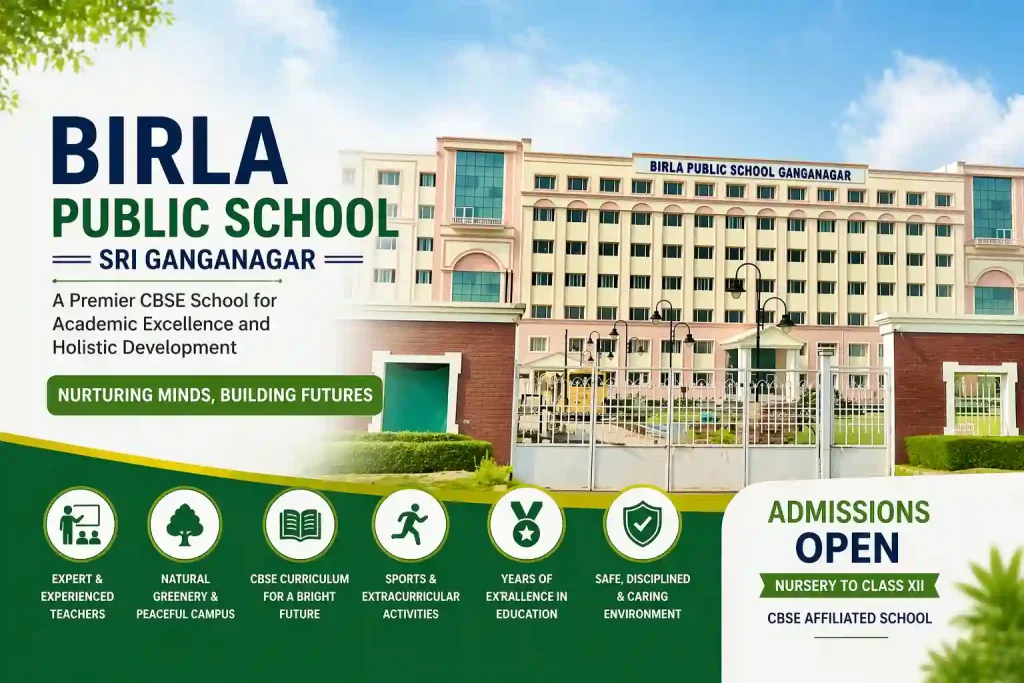
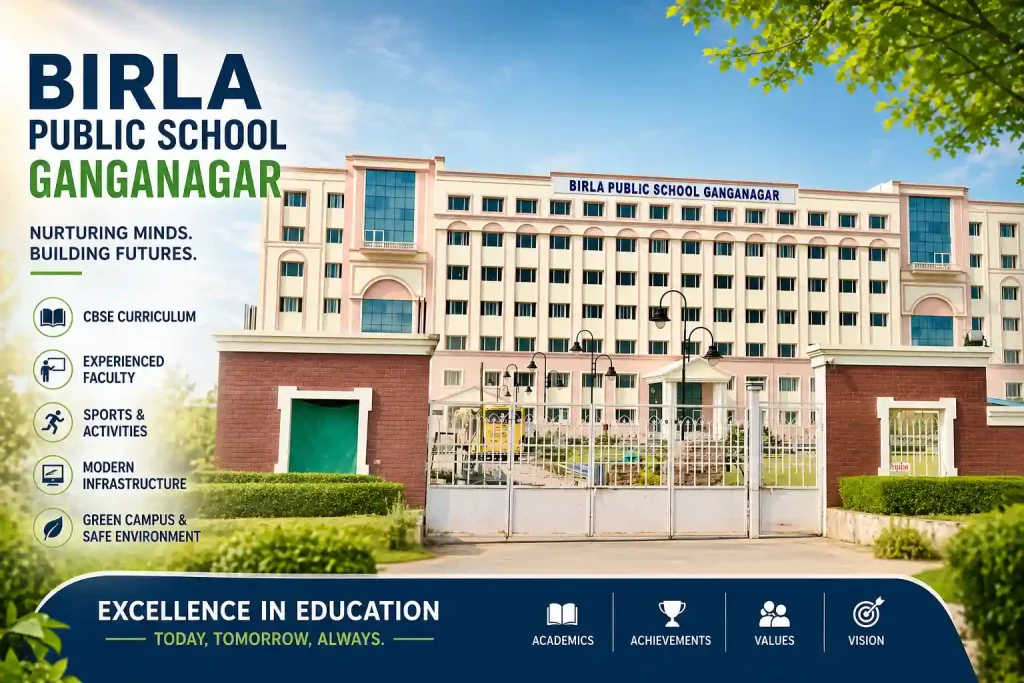
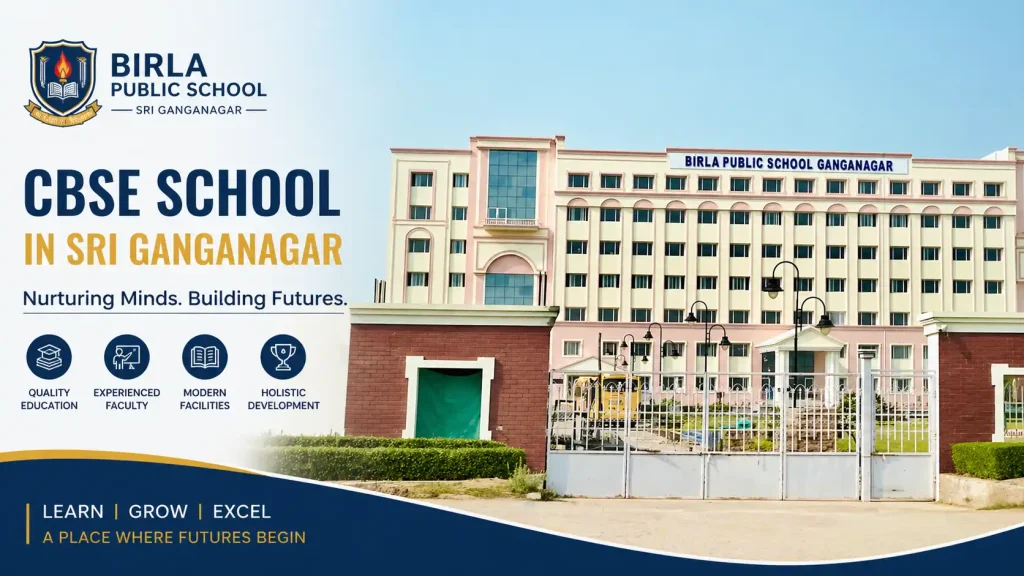
This holistic approach can be particularly valuable when comparing established schools such as Birla Public School Ganganagar with other options.
Fees Transparency & Hidden Costs
School fees should be clearly understood before admission.
Do not compare schools only on the basic tuition fee. Ask for a complete fee structure covering all expected expenses.
Depending on the school, additional costs may include:
- Admission fees
- Annual charges
- Books and stationery
- Uniforms
- Transportation
- Meals
- Sports activities
- Trips and excursions
- Technology charges
- Hostel or boarding charges
- Examination-related expenses
Request a written fee structure and ask whether fees are likely to change in subsequent academic years.
Parent Communication & School Culture
The relationship between parents and school can significantly influence a child’s experience.
Ask how often parents receive academic updates and whether the school provides opportunities to discuss their child’s progress.
You can also explore:
- Parent-teacher meetings
- Digital communication platforms
- Academic reports
- Attendance updates
- School events
- Grievance procedures
- Feedback mechanisms
During your visit, observe how teachers and staff interact with students. A respectful and welcoming environment can tell you a lot about the school’s culture.
How to Verify School Claims During a Campus Visit
A campus visit is one of the best ways to move beyond online information.
Instead of simply taking a guided tour, ask specific questions and observe the school in operation.
Check whether:
- Classrooms are clean and appropriately equipped.
- Students appear engaged during lessons.
- Laboratories and libraries are actually being used.
- Sports facilities are accessible to students.
- Teachers are interacting positively with students.
- Residential areas, if applicable, are clean and supervised.
- Safety arrangements are visible and organised.
- The information provided by admissions staff matches what you observe.
Parents can also ask to speak with existing parents or, where appropriate, understand how the school collects feedback from families.
Final Shortlist Framework: Simple 10-Point Scorecard
After visiting different schools, create a simple scorecard. Give each school a score from 1 to 5 for:
- Academic quality
- Teaching faculty
- Student–teacher ratio
- Student support
- Infrastructure
- Safety and hygiene
- Sports and extracurricular activities
- School culture
- Parent communication
- Fee transparency
The purpose of this scorecard is not to create an absolute ranking. Instead, it helps parents compare schools according to their own priorities.
Choose the Right Fit, Not the Loudest Name
Choosing from the top CBSE school in Sri Ganganagar should not be about selecting the school with the most advertisements, biggest campus, or most impressive claims.
The right school is one where your child can learn comfortably, receive appropriate support, develop confidence, and discover their interests. Parents should consider both measurable factors and the overall environment before making a final decision.
For families exploring a CBSE School in Sri Ganganagar, visiting schools, asking detailed questions, reviewing facilities, understanding the fee structure, and considering the child’s individual needs can make the decision much clearer.
Conclusion
Finding the right school requires more than searching for the “top” or “best” name. Parents should evaluate academic quality, teachers, student support, infrastructure, safety, extracurricular opportunities, fees, and school culture together.
A thoughtful comparison can help families identify an institution that aligns with their child’s needs and provides opportunities for balanced development. Whether you are considering Birla Public School Ganganagar or another CBSE institution, the ultimate goal should be finding a learning environment where your child can grow academically and personally.
FAQs
1. What should parents consider when choosing a CBSE school in Rajasthan?
Parents should consider academics, teachers, student–teacher ratio, safety, infrastructure, extracurricular activities, student support, fees, communication, and overall school culture.
2. How can I choose a CBSE School in Sri Ganganagar?
Start by identifying your child’s requirements and then compare schools based on academic programmes, facilities, faculty, safety, extracurricular activities, fees, and campus environment. Visiting shortlisted schools can also help.
3. Is school ranking enough to choose the right school?
No. Rankings can provide a starting point, but parents should also consider whether the school’s teaching approach, environment, facilities, and activities suit their child’s individual needs.
4. What should I ask during a school campus visit?
Ask about academics, class sizes, teacher qualifications, student support, safety procedures, extracurricular activities, fees, parent communication, and, for boarding schools, residential supervision.
5. Why is holistic development important in school education?
Holistic development gives students opportunities to develop academic knowledge alongside communication, teamwork, creativity, leadership, physical fitness, and other practical skills.
6. What makes a school a good fit for a child?
A good fit depends on the child’s academic needs, interests, personality, learning style, future goals, and the type of environment in which they are most likely to learn and grow.