Walk into a well-run school at the start of the day and you will notice something distinct before the first textbook opens. A single class stands ready to guide their peers through a focused gathering—not just reciting a checklist, but sharing ideas, asking thoughtful questions, and holding the attention of the room. When designed with intention, Students Learn to Lead and Speak in a setting that feels real, supportive, and deeply practical.
Too often, class assemblies are treated as a hurried formality: a routine prayer, a couple of quick notices, and a rushed rush back to desks. Yet for young learners, those fifteen to twenty minutes are one of the highest-value laboratories in the school day. At the early stages of schooling—especially in a Primary School in Sri Ganganagar—children are forming their voice, testing how to organize thoughts out loud, and discovering what it means to take responsibility for a group.
Parents evaluating the Best Primary School in Sri Ganganagar often look closely at exam results, smart classrooms, and campus facilities. Those matter. Still, a child’s ability to stand calmly before peers, articulate a clear idea, listen attentively, and guide a team shapes every classroom and career stage that follows. A purposeful class assembly turns everyday school life into steady, low-stakes practice for communication and leadership.
Why Purpose Matters More Than Performance
A performance assembly asks children to put on a show; a purposeful assembly asks children to think, communicate, and contribute. The difference shows up quickly in how students prepare and how they feel on stage.
When an assembly revolves around memorized lines for a select few, quiet or hesitant learners stay in the background. When it centers on a clear purpose—such as unpacking a civic habit, exploring a science question, reflecting on seasonal changes in Rajasthan’s agricultural belt, or practicing active listening—every child has a meaningful role. One student frames the topic, another shares a short real-world example, a pair poses a quick question to classmates, and another summarizes what stood out.
Purpose also lowers unhealthy pressure. Mistakes become part of learning how to recover poise, adjust voice volume, and stay connected to the audience rather than chasing applause.
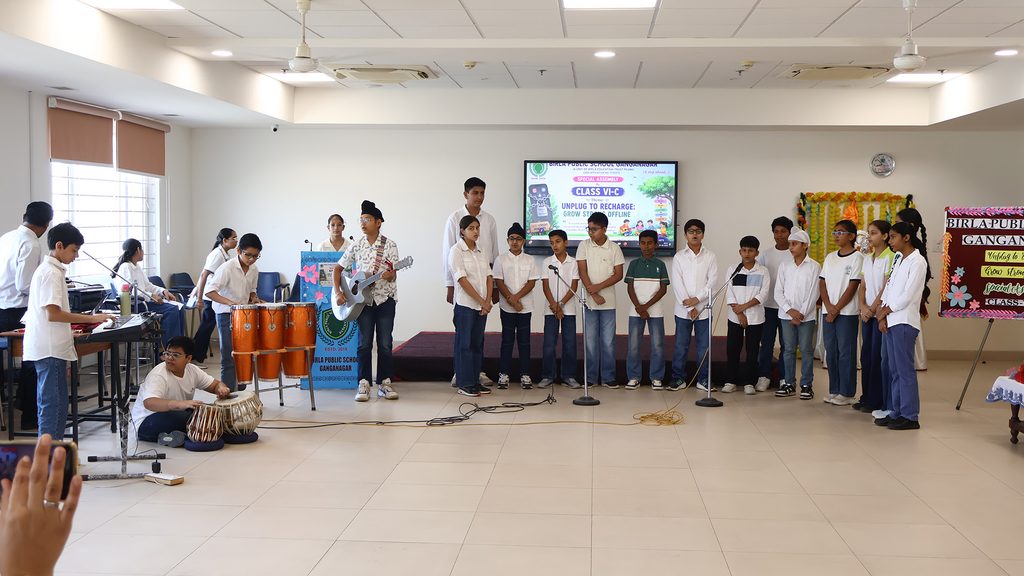
How Purposeful Assemblies Build Speaking Skills
Public speaking is rarely a single talent you either have or lack; it is a stack of small habits built through repetition in a safe environment. Purposeful class assemblies train several concrete speaking skills at once:
- Clarity and pacing: Young speakers learn that rushing makes even a great point hard to follow. Pausing between ideas gives listeners time to absorb what is said.
- Voice projection and posture: Speaking to a row of classmates requires projecting clearly without shouting, standing tall, and looking up from notes.
- Structuring short thoughts: Framing an opening hook, one or two main points, and a concise wrap-up teaches children how to organize ideas before speaking.
- Listening and responding: Assemblies that include short Q&A moments, reflections, or peer prompts train students to listen closely rather than wait for their turn to talk.
- Overcoming stage nervousness: Familiar peers and encouraging teachers turn initial butterflies into manageable energy.
Over a term, even soft-spoken students gain noticeable ease when explaining an answer in class, presenting group work, or speaking up when they need help.
How Students Practice Everyday Leadership
Leadership in primary school does not mean giving commands or standing at the front with a microphone alone. True student leadership looks like reliability, preparation, and care for the group.
In a well-structured class assembly, leadership is shared across roles:
| Assembly Role | Core Responsibility | Skill Strengthened |
| Session Anchor | Guides transitions smoothly and keeps timing on track | Focus, adaptability, and clear signposting |
| Topic Lead | Introduces the theme and connects it to daily life | Synthesis, curiosity, and explanation |
| Peer Moderator | Invites questions or short reflections from classmates | Active listening, fairness, and inclusion |
| Logistics & Flow Coordinator | Checks mic readiness, seating, and entry/exit order | Planning, foresight, and quiet dependability |
| Takeaway Summarizer | Captures the key message in two or three sentences | Concise thinking and accountability |
Rotating these responsibilities ensures leadership is not monopolized by the loudest or most extroverted students. A child who struggles with long speeches might excel at keeping time or organizing props, then gradually step into a speaking role as confidence grows.
Designing a Purpose-Driven Class Assembly Structure
A strong assembly does not need elaborate sets or long scripts. A tight 12-to-18-minute format keeps attention high and leaves plenty of room for student ownership:
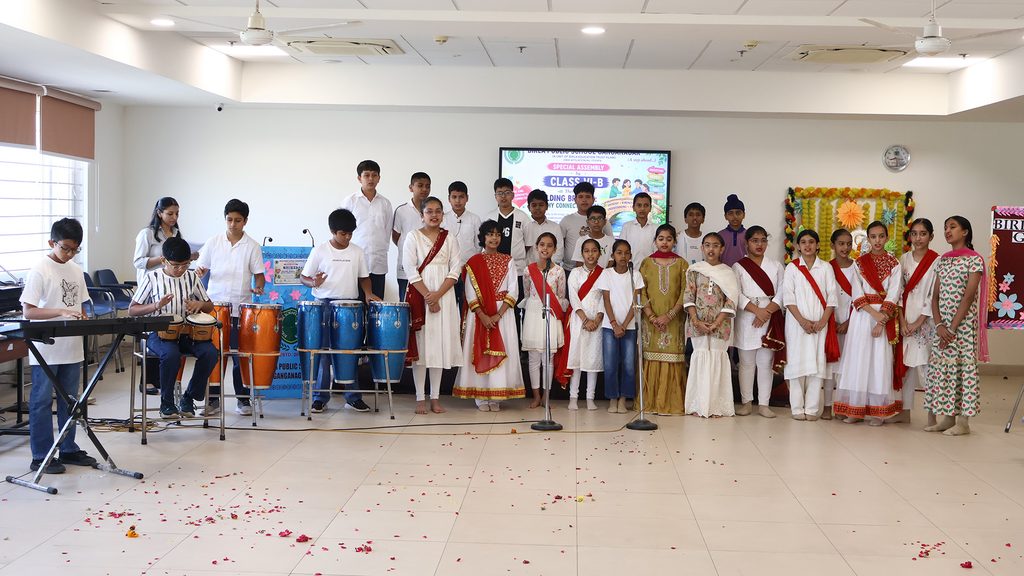
- Calm Opening & Focus (2–3 minutes): A moment of quiet settling, a shared breath or school prayer, and a clear statement of the day’s theme.
- Core Exploration (5–7 minutes): Students present a short story, a real-life scenario, a quick demonstration, or a two-sided everyday dilemma tied to the theme.
- Interactive Check-In (3–4 minutes): Two or three classmates share a brief reaction, answer a prompt, or connect the idea to something they observed at home or in school.
- Actionable Takeaway & Closing (2–3 minutes): One practical habit to try during the day—such as speaking clearly during group work, helping a classmate tidy up, or checking facts before sharing news.
Teachers play a vital behind-the-scenes role here: coaching tone, trimming wordy scripts into natural speech, and giving specific feedback afterward (“Your opening question made everyone look up; next time try slowing down on your second example”) rather than generic praise.
What Families in Sri Ganganagar Should Look For
For parents choosing a Primary School in Sri Ganganagar, observing how a school runs daily routines—including class assemblies—reveals a great deal about its educational culture. Many families searching for the Best Primary School in Sri Ganganagar compare test scores and infrastructure first, yet daily habits often shape a child’s long-term confidence just as much.
When visiting a school or speaking with educators, consider asking:
- Do students plan and host assemblies themselves, or is the format mostly teacher-led lectures?
- How are shy or hesitant learners supported so they participate without feeling humiliated?
- Are assembly themes connected to real life, values, and critical thinking rather than empty filler?
- How do teachers give feedback on speaking clarity, listening, and teamwork?
A school that treats morning and class gatherings as intentional learning time usually carries that same thoughtful approach into classrooms, projects, and peer relationships.
FAQs
1. At what age should children start speaking and leading in class assemblies?
Children can begin participating as early as foundational and early primary grades with short, concrete contributions—such as sharing a single sentence, greeting classmates, or helping organize materials—before taking on multi-part speaking or hosting roles as they grow older.
2. How do purposeful assemblies help shy or introverted students?
Instead of forcing immediate spotlight performances, structured assemblies let quiet students start in low-pressure roles, practice with familiar classmates, and speak on topics they prepare in advance. Gradual, supported wins build comfort without changing their natural temperament.
3. Do class assemblies take valuable time away from core academics?
When kept concise and tied to thinking, vocabulary, and real-world themes, assemblies reinforce academics rather than compete with them. Articulating ideas clearly and listening attentively directly improve classroom participation and comprehension across subjects.
4. How can parents reinforce assembly skills at home?
Parents can invite their child to share one interesting idea from the day in two or three clear sentences, practice speaking at a calm pace during dinner conversations, and encourage small household responsibilities that build follow-through.
Conclusion
Purposeful class assemblies turn an ordinary daily routine into a lasting foundation for growth. When Students Learn to Lead and Speak through clear themes, shared roles, and supportive coaching, they gain far more than stage comfort—they learn how to think clearly, listen with respect, and step up for others. Whether you are a teacher refining classroom routines or a parent evaluating a Primary School in Sri Ganganagar in your search for the Best Primary School in Sri Ganganagar, look for the places where every child’s voice is cultivated with care.